Wednesday, June 27, 2012

let's talk about Badger Days.

In small towns all across the Midwest, summer is chock-full of celebration weekends. Bruce, South Dakota is the home of Honey Days, and the less-creative Arlington holds Arlington Days. Cokato, Minnesota is the proud host of the Corn Carnival, and Glenwood, Minnesota’s claim to fame is Waterama. When I was a kid, my favorite summer event was Badger Days.


Badger Days takes place in the teeny tiny town of Badger, South Dakota. There are one hundred people living there, and there are only three streets. My grandma Sheila lives there and absolutely loves it. 
She and my grandpa Darwin moved there in the mid-90s, and I was an elementary schooler. Their house was adjacent to the playground, which was heaven for their grandkids.

Badger Days was held towards the end of June each year. It’s been many years since I’ve gone, but when I was a kid, it was a HUGE event. There was dinner at the American Legion, which was usually pork loin sandwiches cooked up by the volunteer fire department. After that, everyone would migrate over to the park and wait for the games to begin.

The games were your standard fare: potato sack races, the wheelbarrow race, etcetera. There may have been your regular old sprinting races, but I didn’t pay attention to those. There was usually some kind of baseball or softball game going on at the same time as all of this, too.

To keep competition fair, the games were divided by age groups. Many of the games required partners, and I always teamed up with my friend and classmate Sarah. We were abysmal at the three-legged race, but we were the leap-frog champions. Why? Because we totally cheated.

I know, I know: cheating at Badger Days? But Sarah and I REALLY wanted to win. When we leap-frogged, the leaper would tuck-and-roll to add a bit more distance. Shame on us, but the first place prize was SO GOOD: three tokens (a piece!) to the Badger store. A token was worth twenty-five cents, and considering that the Badger store sold Tootsie rolls for a penny a piece, you could really make a haul. So Sarah and I cheated at leap frog. Honestly, I think we probably would’ve won without the cheating, but there’s not much to be done about it now. We just wanted to taste sweet, sweet victory.

 Every kid who participated in the Badger Days games got one free “thanks for coming” token at the very end. After all the tokens were handed out, there was a mad rush on the Badger Store. The place was packed, wall-to-wall, with ravenous children. The kids who had gotten first place in a race (or two) had enough for the big-ticket items, like the full-size candy bars. The rest of us loaded up on Blow-Pops and Laffy Taffy. There was one year when I actually had enough tokens to buy a turquoise flashlight.

It’s been an awfully long time since I’ve graced Badger Days, but it really was THE place to be when I was a kid. Not only did you get to play games and exchange plastic tokens for giant amounts of candy, but you got to see all your friends. Badger is an incredibly safe place, so if you’re old enough, your parents will just set you free to hang out with your friends. When you’re eight years old, there are few things more delightful.

So if you’re looking for something to do this summer, locate the nearest small town and find out when their festival weekend is. There will be food and games, and who knows: you might even win a game of leap-frog.

Wednesday, June 20, 2012

summer jobs, part II: the church camp.

After my two hellacious summers at Twisters, there was no way that I was going back for a third. I was finally sixteen, so I had a few more employment options. What I really wanted to do was find an awesome summer job in Brookings, the nearest large-ish city. They had little clothing boutiques and flower shops; I was sure I could find a job to love. When my parents asked what my employment-seeking plans were, I informed them of my intent to work in Brookings. In response, they said: that’s great, but then you’ll need to pay for your own gas to get there and back. Brookings was a sixty-mile round trip: a drive that my mom already made every day. A part-time job was not likely to have the same schedule as my mom’s 8 – 5 Monday – Friday job, so I couldn’t plan on riding with her. When there were a handful of summer jobs available no more than fifteen miles away from our house, my parents were not willing to foot the bill for the drive to Brookings. Being a cheapskate, I opted to find a job closer to home and spend my money on other things besides gas.

The area surrounding my house was pretty low on desirable summer jobs. In Arlington, someone of my age could either work in the nursing home cafeteria or the grocery store. Lake Poinsett’s few options included Twisters and a restaurant or two. Things were looking grim… until Mom found the “help wanted” ad in the paper. The Methodist church camp on Lake Poinsett was looking for part-time summer help. I agreed to pick up an application, which I filled out on the spot. I turned it in to the woman who had given it to me (who turned out to be the camp director’s wife) and left with instructions to wait for said director’s call. Sure enough, the phone rang a few days later. It was the director, requesting an interview with me. Since my first job was simply handed to me, I had no idea what to expect in an interview. Dad coached me a bit, advising me to watch out for questions such as “what is your biggest weakness?” I showed up to the interview in my finest interview-wear (which likely consisted of my black skirt with giant blue flowers and a matching blue cardigan) and totally aced it. I was offered the job and happily accepted.

My first day at the camp was summer 2003, and it was the Monday after school ended: no turnaround time for me. There was another girl starting that day, so I was spared being the only newbie on the job. We met the on-duty staff and got a tour of the camp. The camp was divided into two sections: the actual camp and the retreat center. The retreat center was more like a hotel and could be rented out for family reunions and whatnot, so this was a bit fancier. We were given our Lake Poinsett camp t-shirts and filled out paperwork. The other new girl got the rest of the day to move into the staff cabin (employees could stay on site if they wanted), and I was sent home. I was instructed to come back tomorrow, ready to work.

Work I did! I had never worked an eight-hour day before, and this would be my first of many. My job was titled “support staff,” which meant I would work wherever I was needed. That included everything from driving the camp tractor to slicing up cucumbers for the veggie trays to making sure the retreat center rooms had little mints on their pillows. I spent a solid amount of time pulling weeds out of the little gardens, so I spent most of the summer with a bizarre glove/t-shirt tan line. This was also the summer I almost became a lifeguard but ended up flunking out on the first day.

That first summer was positively exhausting. I’ve never been much for manual labor, so much of the work I did was just not up my alley. When the director asked me if I’d come back next summer, I informed him that I’d be happy to on one condition: my time would be limited to the kitchen only. He agreed, and just like that, I had secured my job for next summer.

This director, however, would not last until the next summer. He relinquished his job to a new director. This new guy was the Richard Simmons of camp directors: relentlessly energetic and a firm believer in being able to do anything if you put your mind to it. At the same time, he was a little like a robot who hasn’t quite mastered human interaction, so I will refer to him as the Robo-boss. On my first day, I let the Robo-boss know about my agreement with the last director: that is, working in the kitchen and ONLY the kitchen. Robo-boss was fine with it; he’d hired plenty of other people to do the lawn-mowing and what have you. My friend and neighbor Nick was one of those who worked in maintenance that year, and he and I deemed the Methodist camp kitchen “the Meth lab,” which is a name that’s stuck ever since.

Working in the kitchen/Meth lab was, believe it or not, a blast, and it was all because of the kitchen staff. Deb was the head cook at the camp, and she was so much fun. No matter if we had a ten-person camp or a 120-person camp to feed, Deb was never worried. Deb quickly picked up on each staff person’s favorite things to do, and she would assign them accordingly. She always let me make the signs for the dessert table, which I loved, and I got to write on the light-up blackboard with neon markers. On grill-out days, I was always the one to hand out the frozen desserts, which made me extremely popular amongst the young campers. Deb had a great sense of humor, and she always asked for input for everyone else. Even though I was pretty low on the totem pole, Deb would always ask me for help planning the next week’s menu. Deb always made you feel like an invaluable member of the team, which is a great way to feel. Jan was another cook, and she was wonderful. She always had something funny to say, even if we were doing something as unsavory as scrubbing scrambled egg pans. A day working with Jan and Deb was more fun than work should ever be. Deb’s daughter Ashley began working at the camp, too, and that was even MORE fun.
Ashley and me: just another day of being awesome.
One of the major benefits to working in the kitchen was the leftovers. Every now and again, we’d severely overestimate the kids’ appetites, and we’d have scads of leftover food. Deb, ever generous, would say, “Would your siblings eat leftover hotdogs? Here, take some!” On one particularly bumper day, I took home Belgian waffles, potato stars (tator tots shaped like stars), sausage links, and chocolate chip cookies. The very best days, though, were the days when I got milk. I know what you’re thinking: who cares? My family, that’s who. When all five of us were living at home, my family would drink at least nine gallons of milk per week. Our teeth and bones are rock solid. Anyway, the camp got their milk in cartons, which came in those plastic crates. If the milk was within one day of its expiration date, we could no longer serve it to the kids. One of two things would happen to said milk: it would either be poured into pitches for staff to drink, or it would be sent home with dairy-loving employees. Pouring it into pitchers was actually hilarious. When we did this, someone had to be the designated milk-sniffer: each carton was opened, sniffed to make sure it wasn’t sour (our milk coolers could be iffy when filled with large volumes of milk), and poured in the pitchers. More often than not, I was the milk sniffer (as I can handle the smell of sour milk). Otherwise, I got to drag home the cartons of milk for my family to enjoy (though I would sometimes hear “try and get chocolate next time” when bringing in my third carton of two percent).

My second Methodist camp summer was a breeze, and I truly enjoyed it (expect for when my parents would drive by on the boat, honking at me as I sweated over the grill). My third summer at the camp, though, was going to be something else. The Robo-boss had asked me if I’d care to join them for summer 2005 – the summer after my senior year of high school. I readily accepted, thinking that I’d have another great summer working in the kitchen. On my first day back, Robo-boss informed me that there would be no more of this “only working in the kitchen” business. I would be back to support staff with my days scheduled by the color-coded hour: one color for housekeeping, one color for maintenance, etcetera. I was also told that there would be a strictly-enforced uniform policy: we were to wear our bright blue camp polos at all times. Sure, I’d been given a couple of grey camp t-shirts when I first started, but those were more “wear these if you don’t want your regular shirts to get dirty” shirts, as opposed to the “wear these if you want to keep your job” new blue polos. Robo-boss was no longer the benevolent C3P0 of the previous summer… he was morphing into the Terminator.

I only made it through that summer thanks to my wonderful coworkers. My friends Tiffany and Camber joined the staff that year, and they were a godsend. 
Even the cold water couldn't bring us down.
Working with them was fun, and their lively banter distracted me from all the unpleasant tasks we were assigned, from stripping floors to picking dead fish up off the beach. That summer also saw the arrival of Robo-boss’s son who, believe it or not, was one of my counselors at band camp several years before. Small world.

I still got to work in the kitchen with Jan and Deb, which I always looked forward to. One day, Jan and I had a particularly brutal breakfast: we were quite understaffed on this particular day. Unless it was a teeny tiny camp (20 people or so), we usually had three people working in the kitchen: one to keep the back-up food ready, one to watch the steam table food supply, and one to get started on the dishes. If memory serves me correctly, this particular group was pushing the triple-digits. Since Jan and I were the only two on duty, we had to do our best to stay on top of the food supply. The dishes didn’t get started until after everyone was gone, and by the time we were finally done cleaning, it was time to start preparing for lunch. We were having tacos for lunch that day: one of the more time-consuming meals. Taco day meant that you had to put all the toppings in bowls, at least three of each topping: one for each side of the steam table, and one for back-up. Some of the bowls weren’t bad, like the shredded cheese and the salsa. But you had to chop up the tomatoes and the onions, which could certainly slow things down. Anyway, I was scheduled to go do maintenance right after breakfast, but I couldn’t very well leave Jan all alone with the breakfast mess. So I stayed, browning taco meat and baking cookies like a champ. Lo and behold, Robo-boss came looking for me. He pointed at his watch, asking me if I knew where I was supposed to be. I answered that I believed helping Jan with the lunch deadline was more important, and Jan concurred. Robo-boss was not so convinced. He dragged me off to mow or sweep up dead ladybugs or whatever it was I was supposed to do that day. Jan and I were less than thrilled with how that day turned out.

Working in the kitchen during that summer of 2005 was still fun, despite all the new rules. We all had to wear hats in the kitchen now, but I was lucky enough to have two great hats to switch between: one with the Batman logo and one that said Wayne’s World (from the 2004 Arlington High School production of Saturday Night Live, of course). Deb even found some goofy old chef hats that we would all wear on occasion. 
The chef hats looked even better when
you added a tiara. This was the day
Deb crowned me "Queen of the Cooler."
Depending on who you worked with, life was good. One day, I was scheduled to work the supper shift, and I was so disappointed to find out that the lunch that day was grilled cheese sandwiches: my favorite meal. My coworkers managed to save me a couple, and they stuck them in the fridge with a big sign indicating that they were mine and mine alone. Who knew that grilled cheese sandwiches were microwaveable?

When I wasn’t goofing off in the kitchen, I still had to participate in manual labor and various housekeeping tasks. One day, I learned of the best way to get out of said tasks. A handful of my coworkers and I were doing some kind of cabin maintenance… I don’t remember if this was the day we were disassembling bunk beds or fixing tiling, but we were doing something unpleasant. Anyway, Robo-boss decided we needed some lumber from the building materials store about twenty miles away. The actual maintenance crew was off for the day (hence the gaggle of ladies doing bizarre manual labor), so they couldn’t go. Robo-boss didn’t dare abandon his crew, so he asked who was willing to drive the camp pick-up to get it. Everybody raised a hand: it would be a welcome break from the current activities. “Great!” said Robo-boss. “Who can drive a stick?” All hands went down… except for mine. As the only female staffer who could drive a five-speed, I was sent on all the errands from that point forward.

By the time my third Methodist camp summer drew to an end, I was ready to throw in the towel. I told myself that I would find another job for next year, even if I DID have to pay for my own gas to Brookings. Believe it or not, my plans didn’t exactly work out. I was just busy being a college freshman – homework, dorm life, what have you – that when Robo-boss called, offering me my old summer position, I shrugged and accepted. After all, it was way easier than trying to look for a job from more than one hundred miles away. I did have one stipulation: I wanted to be in the kitchen and only the kitchen, just like my second summer. Robo-boss agreed, and just like that, I was promoted from support staff to cook.

I returned to the camp that summer, feeling triumphant at having my first year of higher education under my belt. Robo-boss pressed me to move into the staff cabin: after all, I’d been living away from my parents for the entire school year; why would I want to move back in with them for the summer? I politely declined for a number of reasons: 1.) My parents’ house had a great deal of comforts that the cabin did not, such as internet and a reliable source of hot water. 2.) If I lived in the cabin, my paycheck would be less room and board. No thanks. 3.) It would be like I never left work. Those who lived in the staff cabin were more or less on call at all times, and that was certainly not for me.

My fourth summer at the camp began quite nicely. Since I was now a cook, I could be totally in charge of a meal. I’d have to figure out quantities and timing, but I’d have a helper or two to whom I could assign tasks. I have to tell you: that was pretty great. I was working with all of my favorites: Deb, Jan, Camber, Ashley, and Tiffany. My grandma Sheila and my former babysitter Doris even joined the kitchen team. Summer was off to a great start.
Tall Tiff had a good time working
with short Sheila. :)
However, my happiness was short-lived. About halfway through the summer, Deb resigned. She had a new job, and we were all sad to see her go. The kitchen was left without a head chef, so one of my coworkers (who was on her seventh summer at the Methodist camp) took over. This particular coworker (whom will henceforth be referred to as the Kitchen Nazi) had recently been named the assistant director of the camp, and with the promotion came a severe power trip. Within days of her promotion, the Kitchen Nazi had pasted step-by-step instructional signs all over the kitchen: there was even a sign as to how to properly close the cooler door. My dessert signs had been amassing ever since my first summer – I had a neat little sign for every dessert we served. One day, I opened up the cupboard where the signs were kept… to find them replaced with laminated signs that stated the dessert and nothing else. Confused, I asked the Kitchen Nazi where they had gone. She coldly stated, “I don’t think they’re professional, so I threw them away.” I was stunned. Not professional?! It was a summer camp, for crying out loud! What was so bad about little pen-drawn pictures of cookies?

My dessert signs were not the only casualty of the Kitchen Nazi. Remember the light-up blackboard with the neon markers? Besides creating dessert signs, writing out the upcoming meal was my favorite kitchen task. If it was pizza day, I would draw little pizza slices. If it was chicken day, I’d draw little drumsticks. On particularly slow days, I had been known to make the menu into a crossword puzzle. Anyway, you get the idea: fun, colorful menus. Shortly after the dessert signs bit the dust, I opened up the neon marker drawer to find a brand new sign stuck to them. You guessed it: it was a blackboard menu procedure. No more pictures, no more squiggly borders, no nothing: just a list of what was being served, and that’s it. The Kitchen Nazi was well on her way to outlawing everything fun in the Meth lab.

Robo-boss and the Kitchen Nazi made quite the evil team. Whenever they’d enter a room, you could almost see the energy being sucked out of it. I spent the rest of my summer walking on eggshells. I stopped going to “staff fun nights,” as Robo-boss and the Kitchen Nazi were guaranteed to be there and in fun mode, which was pretty terrifying as well. Were it not for that handful of truly great coworkers, I never would’ve lasted the summer.

Summer 2006 was my last summer at the Methodist camp as well as my last really care-free summer. Determined never to go back to the camp, I got a summer job at the Brookings County courthouse and worked there in the summers of 2007 and 2008. The job was full-time and business casual: totally different from the “you might only work ten hours this week, wear jeans and sneakers and goof off with your coworkers” summer jobs that I’d held before. Summer 2009 found me as a new college graduate: my days of having simple summer jobs had come to an end.

Though my tenure at the Methodist camp ended on a less-than-pleasant note, I really do look fondly upon my time there. It reminds me of a simpler time, before rent and student loans and wondering what exactly I should be doing with my life. I met the greatest people, and – as you might guess from this lengthy article – got some interesting stories out of it. I’m even lucky enough to get together with my old coworkers from time to time. I see Jan whenever I go to my hometown church, and we always laugh about our time in the kitchen. Camber has been all over the world in the last few years, but whenever she passes through the Midwest, we do our best cross paths and reminisce about the good and the bad. Tiffany is busy teaching, but whenever I see her, it’s like no time has passed at all. The last time I saw Deb and Ashley was at camp, but here’s hoping to a reunion soon.

So now you have it: my first two jobs. Twisters and the Methodist camp were only the beginning of my working life, but as my first jobs, I’ll certainly remember them for the rest of my life – for better or for worse. They serve as great comparisons whenever I’m displeased with a job: all I have to do is think, “Hey, I could still be breading chicken at Twisters or making eggs-in-a-bag in the Meth lab!” and suddenly, my current job seems like the best thing ever. 
Ugh, eggs in a bag.
Thanks for the motivation, teenage jobs! You’ve been more helpful than you’ll ever know.

Wednesday, June 13, 2012

the dog chronicles: Buddy.

Spring semester of my senior year of college was nothing short of AWESOME. I had finished my English degree during the previous semester, and all I had left to take were a final few art history courses to wrap up my Art History degree. The rest of my schedule included jazz and concert band, writing the Feature section for the school paper, and working part-time at the local coffee shop. Things were good.

In addition to my delightful academic schedule, I had a pretty great living situation. I had moved into the house on Third Street at the beginning of my junior year. There were five of us living there, and it was mostly fun – minus the moldy basement (where my room was) and the creepy fifth-year roommate that spent all his time locked up with his barely-legal girlfriend. The following year, creepy fifth-year moved out and two others moved in. During winter break that year, three of the six people living there ended up moving out. Our house was down to three: Sara, Nate, and me.

The three of us actually had a great time in our pea-green college house. We studied in the living room with Sex and the City in the background, and we took turns ordering Pizza Hut. We went on “family” outings to Target in Alexandria, and we had movie nights when our homework load permitted. During one of these movie nights in early April, we opted to watch Bolt. When the movie was over, Sara (a dog lover) said, “You guys… we should get a dog!” Thinking nothing of it, I agreed that a dog would be pretty great. It was another one of those bright ideas that I thought would never come to fruition, like getting all the mold out of the basement or finding a high-paying job immediately after graduation.

The next day, I came home from class to find Sara and Nate in the living room… with a dog. They had been on petfinder.com that morning and had located a six-month-old black lab in Glenwood, just thirty miles away. Nate and Sara made the trip and determined that the lab named Buddy needed to come home with them.
He's so happy!
Buddy was the most awkward dog I have ever met. At any social gathering, there’s always a guy who stands in the corner, not speaking to anyone and looking really uncomfortable. Buddy was that guy.

Like most Humane Society dogs, Buddy’s family tree was somewhat of a mystery. He was predominantly black lab, but he was long and lean like a greyhound. Buddy was gangly, and I saw him trip over his own feet more than once.
He was even an awkward cuddler.
There was no question that all three of us would walk and play with Buddy, but he was ultimately Nate’s dog (as Nate had been the one to foot the adoption fees). Nate had wanted to change Buddy’s name to “Jazz,” but even as the dog’s official owner, he was vetoed by Sara and me. “Jazz?” we said. “Come on.” The name “Buddy” was not terribly creative, but the dog did tilt his head at you when you said it, so that was good enough for us.

It didn’t take long before Buddy had a pretty sweet set-up at our house on Third Street. He had food, three enthusiastic dog-walkers, and a place in Nate’s bed (according to Nate, Buddy liked to be the little spoon). 
According to Sara, too.
Buddy even had a custom-made collar, courtesy of Sara’s parents. The one thing Buddy didn’t have, though, was enough toys. Allow me to state the obvious, but Buddy liked to chew on stuff. Buddy, reinforcing stereotypes, loved to chew on shoes. I kept my shoes behind my closed bedroom door, so I never sacrificed a pair to the jaws of Buddy. Sara, however, lost a pair of sandals, and at least one pair of Nate’s dress shoes was destroyed.

The Day Nate’s Shoes Were Eaten became a day that lived in Third Street infamy. Sara and I got home just minutes before Nate did, and we found the shoe carnage. There were chunks of shoe all over the living room, and Buddy just cocked his head at us. Before we could say, “Nate’s going to be MAD,” we heard the back door open. It was Nate. Neither of us wanted to be present while the Wrath of Nate was unleashed, but there was nowhere to go without him spotting us. There was one tiny spare room off the living room: it was mostly filled with junk our three former roommates hadn’t claimed yet. Sara and I crept into that room before Nate got to the living room. We tried to call Buddy in to hide with us, but Buddy just looked confused. 
A lot like this.
Sara and I peered through the crack in the door as Nate strode into the living room. Seeing the remains of his shoes, his face turned a vibrant shade of crimson. Nate yelled and waved his arms about, but Buddy continued to simply look confused. When Nate ran out of obscenities to yell at the dog, Sara and I were hoping that he’d vacate the living room so we could make our escape. No such luck. Nate plopped down on the couch and turned on the TV. Sara and I looked at each other: how were we going to get out now? We couldn’t very well open the door and say “surprise! We’ve been here the whole time!” As luck would have it, Nate briefly left the couch to get a Mountain Dew. Taking full advantage of this fleeting reprieve, Sara and I tiptoed out of the spare room. We ran into Nate around the corner, who wanted to know where we had come from. Needless to say, he figured us out pretty quickly. Shortly after the Day Nate’s Shoes Were Eaten, Sara and I gathered up the spare change from the house and bought Buddy a bunch of toys from the Family Dollar.

On the whole, Buddy was a good dog. He had a habit of standing up in the window and looking sad when you left: when combined with beautiful spring weather, this gesture made it especially hard to go to class. 
"Come back!"
Buddy wasn’t the best walker, either: he tended to run in circles and wrap his leash around your legs. Buddy was friendly, though: if you were on the couch doing your homework, he was sure to be huddled up against your legs.
Or he would be right on the couch with you.
Like all good things, my time with Buddy had to come to an end. Sara and I graduated that spring, and Buddy went to live with Nate. That summer, I had an internship in Denver. I came home for a week in July for the Brookings Summer Arts Festival, and Sara and Nate joined me – and brought Buddy! Buddy got to play with my parents’ enthusiastic black lab, and Buddy seemed a little bewildered. 
Maybe because Nate kept picking him up.
Dad had fun playing softball with both dogs, so now every time I say anything about Nate, Dad responds with “I miss Buddy.”

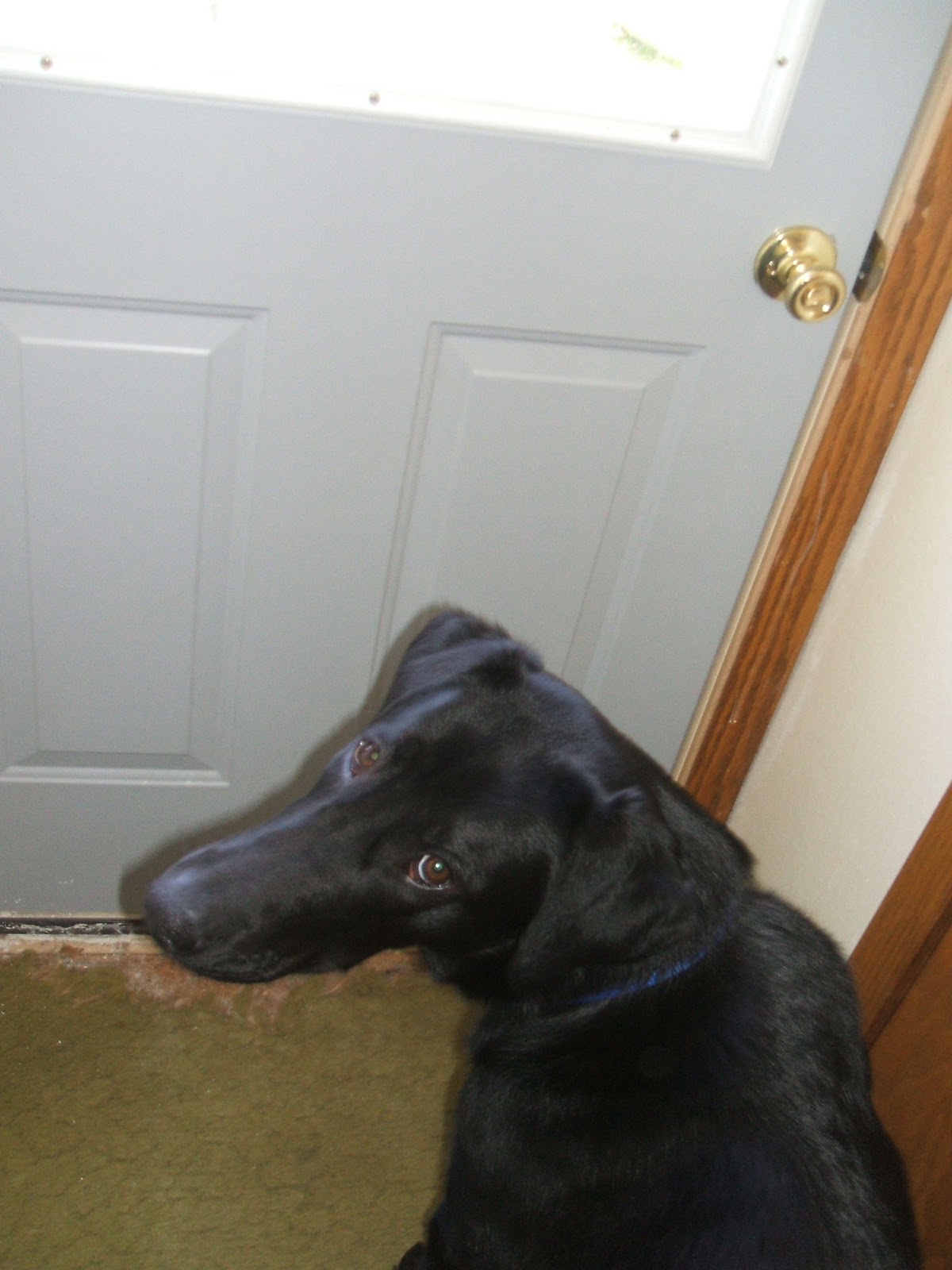
It’s been a while since I’ve seen Buddy, but Nate assures me that he’s just as awkward as ever. Even though I only lived with him for a month or so, Buddy helped cement my love for goofy black labs. 
So goofy!
Stay tuned for part three of the dog chronicles: Shadow, the other goofy black lab!  

Wednesday, June 6, 2012

summer camp stories, part I: Norwegian camp and church camp.

Like most kids who got on their parents’ nerves over the summer, I spent my fair share of time at summer camps. My summer camps, however, were completely ridiculous.

In the summer of 1999, I was twelve years old. I had just finished sixth grade, and I was looking forward to a long and lazy summer. My plans involved Lake Poinsett and pretty much nothing else. That is, until Mom broke the news: I would be spending the first week of June at Norwegian camp in northern Minnesota.

Yes, Norwegian camp. That’s a thing. My grandma Lorraine, a full-blooded Norwegian, decided that she would be sending my eight-year-old sister and me to a week-long Norwegian camp. We didn’t know enough about our heritage, she claimed, so it was time to get down to business.

I was not thrilled. This severely interfered with my lake-going plans. Besides, I was already slated to go to church camp in July. Two camps in one summer just seemed unnecessary. Unfortunately, there was no getting out of it. Grandma had already gotten us scholarships from the Sons of Norway, so that was that. Darrah and I packed our bags for Norwegian camp.

Norwegian camp was a part of a number of other language and culture immersion camps located in northern Minnesota. I remember flipping through the brochures for other camps and wishing desperately that I’d been sent somewhere less dorky, like Korean camp or French camp. There, I’d at least learn Tae Kwon Do or get to eat croissants.

The drive to Bemidji was almost six hours long. We arrived in Bemidji with some time to spare, so Mom took Darrah and me to the little science museum on main street. It seemed like a “last supper” of sorts… the last fun thing we would do in a week, perhaps. Darrah and I got to hold a boa constrictor and buy little necklaces with seashells on them.

But then, harsh reality set in: it was time to check in at Norwegian camp. We converted our American money into Norwegian kroner (to be used to buy Norwegian chocolates or shirts with Norwegian sayings on them). We chose Norwegian names to be used for the week (mine was Charlotte, but it was pronounced crazily… Car-low-ta, I think). We also went through our suitcases for contraband: no American music or books in English were allowed. Go Norwegian or go home.
Unfortunately, "go home" wasn't
a viable option.
Mom and Grandma helped us drag our suitcases to our respective cabins. Each cabin was named after a major city in Norway, and they were separated by age. I was on the second floor of the Trondheim cabin. Upon my arrival on said floor, I was hit with a noxious stench. Turns out one of my roommates had barfed on the floor in the not-so-distant past. The windows were wide open and the fans were blowing, but the camp staffers were hard-pressed to get that smell out of the room. It was going to be a long week.

I don’t remember everything I learned during that week, but one thing has stayed with me throughout the years: Norwegian food is god-awful. There were all sorts of strange fish products, and goat cheese reigned supreme. After the first day or so of Norwegian camp, they expected you to know the Norwegian word for all of your food. There was a counselor stationed at every table, and unless you could ask for your food in Norwegian, you weren’t getting any. When the only Norwegian food you know is “lutefisk,” believe me, it’s better to go without. The only meal worth eating was breakfast, and even then, I made sure to stay away from the mystery sausage.

I remember sitting through a crash-course in Norwegian mythology, which is actually kind of awesome. We played Norwegian games (many of which just involved running up and down a big hill) and tried our hand at Norwegian crafts. We put on a “play” to show off our Norwegian speaking skills – I held up a paper crustacean and said confidently, “Jeg er krabbe.” There was even one evening when we dressed up and learned Norwegian folk dances. My grandma would’ve loved it.

Darrah and I survived Norwegian camp, a few pounds lighter and not much wiser. The absolute kicker, though, came after we got home: I needed to make a speech at the next Sons of Norway meeting and thank them for the scholarship. No problem – except I had to put on Grandma’s Norwegian costume and pretend that Norwegian camp was the highlight of my life. 
Yikes.
So that’s exactly what I did, and I made dozens of elderly Norwegians very happy. However, I did draw the line when they asked me to folk dance.

Now that Norwegian camp was out of the way, I could look forward to my upcoming week at NeSoDak: a church camp located in Waubay, South Dakota. It wasn’t necessarily the camp itself that I was looking forward to: all of my friends were going to NeSoDak, so it was mostly an excuse for a week of canoeing on Lake Enemy Swim.

Waubay is only an hour and half away from Arlington, so the trip was an easy one. Unlike Norwegian camp, we were allowed to bring books for “quiet time,” but you’d better make darn sure that one of those books was your Bible.

NeSoDak ended up being simply bizarre. The counselor in my cabin was an angry girl named Laura who wore nothing but Veggie Tales t-shirts. There was a competition each day to see who would have the cleanest cabin, and the winner got to keep the “golden plunger” for the day. If I am not mistaken, my cabin (the Bethlehem cabin, no less) won at least once. The camp was overrun with frogs, and my friend Sarah spent a good deal of time trying to catch one to name the Gipper. I did go canoeing once, but Lake Enemy Swim was completely overgrown with weeds. You couldn’t go swimming for risk of getting tangled in the weeds and drowning. Yes, this was a horror movie in the making.

Of course, we had all the normal church-campy activities: outdoor Bible study, guitars ‘round the campfire, goofy dinner table Jesus jingles. We did, though, have this “day of silence” where no one was allowed to talk from sundown one night until suppertime the next. We were supposed to use this time to “reflect on Jesus’s sacrifice,” but honestly, asking a bunch of twelve year olds on summer vacation to be quiet for 24 hours is absurd. We didn’t use our quiet time to reflect; we used to it pass notes and try not to giggle aloud. I don’t know if they expected us to have a life-changing spiritual revelation or what, but seriously, we were TWELVE. Plus, a whole camp of silent middle-schoolers is really creepy.

Anyhow, I survived NeSoDak… only to be shipped off to Klein Ranch the following summer. Klein Ranch is a part of the same system of camps as NeSoDak, but Klein Ranch was geared towards slightly older kids. My friend Sarah and I went to Klein Ranch during the summer of 2000. Her parents, Bill and Sharon, drove us the five hours to west river Isabel, SD. As we pulled into the camp, a gangly guy with blond curly hair came bolting out the car, waving like a maniac. Bill turned around and said to us, “Here comes Jose!” Sarah and I about died laughing. Why Bill had decided to call this guy Jose, we will never know. His real name was Nate. He was the camp cook and spent a great deal of time trying to convince us that prairie monkeys are real (they’re not).

Klein Ranch was, as you might’ve suspected from the name, a ranch. Its big draw was that you could ride horses. Sarah and I had not spent a lot of time on horses, so we thought this would be great. We each signed up for a beginner horse: Sarah was assigned a horse named Berry, and my horse was called Jake. Jake was old and stubborn: he would always stop and eat grass, so I was always the last one down the trail. Plus, he farted all the time. The guy who was in charge of the horses was a skinny little wisp of a man who had a speaking voice identical to Michael Jackson’s. Sarah and I never learned his name, so, of course, we called him Michael. Michael led us on all our riding adventures, including the sunrise meditation ride. That was a delight, as you can imagine.

Since Klein Ranch was way up in the Badlands, water was a precious commodity. We were informed that we would have ONE SHOWER. FOR THE ENTIRE WEEK. We were teenagers who would be spending the week riding horses. Limiting showers to one for the week seemed like a terrible idea, but what do you do?

It didn’t take long before Sarah and I realized that we’d made a huge mistake by going to Klein Ranch. Both of us enjoyed a daily shower, and we quickly learned that horses were not that great. By day two at Klein Ranch, we had already counted the hours until we could go home. When things at camp got particularly lame (like the hay ride on the 100 degree day), we would remind each other that there were only 83 hours left until sweet, sweet freedom.

Without the reprieve of our riding group, Sarah and I surely would’ve lost it. We were each assigned to two groups: a cabin group and a riding group. The cabin group was simply that: the people in your cabin. The riding group was also self-explanatory: it was the group of people with whom you would ride horses. The cabin group was females only, but the riding group was co-ed. We didn’t do anything with our cabin groups except clean the cabin, but we spent a great deal of time with the riding group. Sarah’s and my riding group leader was a skeezy guy named Eric who hated his job. He had a disgusting goatee and looked like he didn’t mind the one shower a week rule.

As the slacker group, we actually kind of lucked out by having Eric as our leader. When we were supposed to be participating in an all-camp game of freeze tag, Eric let us hide in the hayloft and answered the teenage boys’ questions about sex (yes, this really happened). During designated Bible discussion time, Eric steered the conversation toward movies. Eric also sweet-talked the kitchen staff into letting our table eat first on more than one occasion.

Our week at Klein Ranch finally ended, and so did my years of attending church camp. However, my years of band camp were just beginning. Stay tuned (ha ha) for tales of my years at SDSU band camp!

Wednesday, May 30, 2012

summer jobs, part I: Twisters.

For the first thirteen years of my life, every summer was dedicated to the lake. Sure, I might have the occasional swimming lesson or summer camp that would interrupt my lake-filled summer, but that was all secondary. For the most part, my summers were spent at my discretion, which usually meant accompanying my family to Lake Poinsett.

Lake Poinsett didn’t have very many dining options nearby. There were a few c-stores and a couple of restaurants, but after a day of boating, you don’t really want to sit down with a menu and order steak. Finally, a restaurant came along to fill the void: an ice cream shop called Twisters.

Twisters was a lot like Dairy Queen. Their food was standard summer fare: hotdogs, burgers, fries. However, Twisters did have broasted chicken and (most importantly) ice cream. After hours of swimming, my family and I happily sloshed into Twisters and devoured our hard-earned ice cream cones.

The owners, Jim and Mary, were the nicest two people to ever walk this earth. They got to know everyone who walked through their door, and if there was time, they would join us at our table and chat. I looked forward to trips to Twisters not just for the ice cream, but for the chance to see Jim and Mary.

One Labor Day, we stopped in at Twisters to get our last fix before they closed for the season. Jim sat down with us, but this time he had a question for me: “How old are you?” I answered that I was thirteen. Jim asked if I’d be fourteen by the beginning of next summer. With an April birthday, I certainly would. Right then and there, Jim offered me my first summer job. I readily accepted, feeling like an adult already.

Summer 2001 was upon me before I knew it, and that meant my first day at Twisters. In South Dakota, you can work at fourteen, and I was more than ready to do so. Of course, I’d never had a paycheck before – birthday money and allowance made up my meager income. I was thrilled to be earning minimum wage, and I immediately began to compile a list of things I would buy with my riches.

I learned the ropes at Twisters fairly quickly. My responsibilities were similar to soda jerks across the nation: I took orders, made ice cream treats, ran the cash register, and did whatever food prep/cleaning tasks that needed to be done. I was the only fourteen-year-old on the staff that year, and that meant I couldn’t work past 9 o’clock (Twisters closed at 9, so I never had to mop the floor or do any of the less-than-pleasant closing duties).

For the first couple of weeks, I was in heaven. I got to hang out in one of my favorite places with the nicest people, and I was getting paid to do so! My friends and family would come to see me, and I could show off my new ice cream-making skills. Jim, a fellow Simon and Garfunkel fan, would let me bring my Simon and Garfunkel CDs into work so we could broadcast them over the stereo. Jim and Mary allowed free soda for employees during their shifts, and I would write a movie quote on my white Styrofoam cup, beginning my several-year tradition of “quotes of the day.” Best of all, as I was learning how to properly make cones, I was allowed to eat my mistakes. Yes, that was the life… until I found out that Jim and Mary were selling Twisters.

I was saddened, but I understood. Jim was a teacher, and he didn’t want to spend his whole summer working (Twisters was open seven days a week, Memorial Day through Labor Day). Mary had a full-time job, so working at Twisters during her spare time was getting exhausting. They were wonderful bosses, and I was sorry to see them go.

The new owner began training a few days before the Fourth of July – Twisters’ busiest weekend. She seemed ok at first, but I quickly learned what she was really like. Henceforth, I shall refer to her as the Dragon Lady.

In my working life, I have been blessed with some truly great bosses, Jim and Mary being the first in this long line of fantastic employers. Fortunately, I’ve only had one awful boss, and that was the Dragon Lady of Twisters.

After Jim and Mary trained the Dragon Lady in, they stopped working regular shifts and offered to be available for emergencies. The Dragon Lady was artificially nice when they were around, so we all spent our days hoping for an emergency.

Earlier, I mentioned that Twisters served broasted chicken. That chicken was the pride and joy of Twisters, and people just loved it. Our chicken meals came with coleslaw or beans, and I was someone deemed the coleslaw dressing maker. I would make gallons of this dressing at a time, which was quite the feat. I spent much of my time at Twisters digging mustard out of a giant vat, which would stain my skin a fetching shade of jaundicey yellow. “Evil Yellow Mustard Hand” would be a good name for a supervillain, don’t you think?

I spent two summers at Twisters, the second of which was entirely under the Dragon Lady’s jurisdiction. I was shocked when she called me back for the second summer: after spending all of last summer admonishing me for being too generous with the size of the ice cream cones, I figured I’d be on my own. Against my better judgment, I accepted Dragon Lady’s offer of another summer of employment. When you’re fifteen, you take what you can get.

During the previous summer, I had earned the unfortunate title of Champion Chicken Breader. Allow me to explain: all our chicken for broasting came to us, unbreaded, in boxes. One box held around one hundred pieces and would fill up one rather large serving pan. When the cook was getting low on chicken, someone had the less-than-pleasant task of gloving up and rolling the slithery chicken parts in breading. Aside from getting breading all the way up my elbows, I didn’t really mind. It gave me a nice break from answering the phone and making root beer floats.

I really was a champion breader: I wasted almost no breading, and I expertly stacked the pieces so that they wouldn’t topple over in their pan. Every once in a while, though, I’d run into an obstacle that would thwart all champion chicken breaders: green chicken. Every now and again, we’d order more chicken than we could sell, and the chicken would go bad. My solution was to throw away the green chicken. Dragon Lady’s solution was to tell me to “just bread it; it will be fine once it gets fried.” Horrified, I still threw away the green chicken when Dragon Lady wasn’t looking, and I warned everyone I knew not to eat the chicken.

As the summer wore on, Dragon Lady got crankier and crankier. She fired one of my coworkers because my coworker had the day off and couldn’t come in right away when called to come in when the night became unexpectedly busy. My family and I had taken a trip to Colorado that summer, and when we were pulling out of my aunt and uncle’s driveway, the rear axle stabilizer on our minivan broke. No one had the part we needed, so Dad had to get the old one welded, which set us behind a day. I was scheduled to work at Twisters, so I called Dragon Lady and informed her that we were stuck in Colorado for the time being. She reacted like I had just told her that I had stolen all of the money from the cash register. Dragon Lady ended the conversation with a snappy, “Well, you’d better be here the next day,” and hung up on me.

When the Dragon Lady wasn’t around, though, my coworkers and I still managed to have fun at Twisters. During that second summer, the Dragon Lady bought the little chunk of beach across the street. She installed a dock so boaters could park, run up the hill for their ice cream, and be on their merry way. The ice cream business was notoriously slow during the week, so on hot days, my coworker and I would wander across the road to the Twisters dock and dip our feet in the water. We always took the phone with us, and we always kept an eye on the road for potential customers. 

When Twisters closed on Labor Day, I decided that there was no way I’d be going back to work there next summer. The following summer, I would be sixteen and hopefully have more employment choices. Dad made his expectations clear: “Either you get a job, or you work for me… and I don’t pay very well.” Even picking rocks for Dad would’ve been a welcome alternative for another summer with the Dragon Lady.

Luckily, I did find another job: working at the local church camp (which is a story for another day). It was just down the road from Twisters, so I would occasionally stop by for an ice cream cone after work. One day, I was eating at Twisters with my parents, and the Dragon Lady approached our table. “Calla,” she rasped, “do you have any of your Twisters shirts?” (We had been issued red t-shirts with the Twisters logo in the corner.) I replied that I only had one, and she barked, “Bring it by sometime,” and promptly retreated. I gave my parents a “did that just happen?” look, to which my dad answered, “When we get home, you’re going to put that shirt on and help me change the oil in your car. If you ‘accidentally’ spill some oil, that’s just too bad.” Upon further discussion, we decided that I shouldn’t return the shirt at all: if the Dragon Lady wanted it so badly, she could come and get it. The Dragon Lady actually did call me a week or so later, asking about the shirt. I informed her of my incredibly busy schedule and offered to leave it on our front porch for her to pick up at her convenience. Believe it or not, she actually sent one of the cooks to get that shirt.

When my sister turned fourteen, she got a job at Twisters. I could hardly believe it, considering she has the same distinctive last name as me and was often seen at Twisters with me – the Dragon Lady had to have known we were related. Anyway, Darrah informed me that things had really taken a dive since I had been there: the Dragon Lady had taken to keeping vodka in her Styrofoam drink cup, and she had put a stop to Jim and Mary’s policy of free soda for employees. Best of all, there was a sign in the backroom stating that all employees must return their red Twisters shirts, or else they won’t be getting their last paycheck. I’d like to think that I was responsible for that sign.

So, my friends, that is the story of my first summer job. My first summer job experience was probably not much different than most; everyone’s first job is kind of crappy. Thankfully, my jobs have more or less improved since then. However, I’ve still got some decent job stories. Stay tuned for the next installment of summer jobs: the church camp!

Wednesday, May 23, 2012

let's talk about art class.

When I was a kid, I loved to draw. I did nothing BUT draw. I lived for the days when Mom would take me to work: that meant I got to color with highlighters on those huge rolls of paper with the perforated edges. My mom’s office walls were covered in pictures I drew (some of them are still there). When I went to my babysitter Doris’s house, I would narrate stories to her. She would write them down, and I would spend hours illustrating them. 
Doris was patient enough to write
"beautiful" seven times in reference
to my less-than-beautiful
Christmas tree.
I drew everything you would expect a five-year-old girl to draw: mermaids, cats, rainbows. My animals tended to be quite feminine: I even made sure my cartoon fish had luxurious eyelashes and bright red lipstick.
This is a cat I drew for my mom's coworker Marlys.
Note the stunning use of highlighters and the
copious amount of mascara the cat is wearing.
As soon as I learned to write, I began penning my own stories. 
I created volumes and volumes, most of the stories being illustrated accounts of my own thrilling life. There was a book about how my friend Nick and I found a dead fish on the beach, and there was a book about the time my mom saved my pink silk rose (it was my Beauty and the Beast rose, of course) from the burn pile. During the height of my Lion King obsession, I wrote my own Simba and Nala stories: elementary school fan-fiction, if you will.

All that writing was just an excuse to draw. Sure, I drew plenty of free-standing pictures that needed no explanation, but I wanted my pictures to tell a story. What better way to do that than write my own little books?

For the first few years of school, all I did was draw and color. School supply shopping was eagerly anticipated: it meant that I’d get a brand-new box of crayons. In kindergarten, my favorite worksheets were the ones where you had to read the instruction: color the mitten red. A fast reader and an enthusiastic crayon-er, I breezed through these worksheets, actually disappointed when I had finished: I was a nerd-in-training.

When I learned that we would soon have an entire class devoted to art, I was ecstatic. This “going to school” thing was AWESOME. I eagerly packed up my bright red pencil box and skipped off to my first art class. When I arrived, I staked out the best seat in the house: up front, by the window. I sat patiently, awaiting instruction as to what we would be doing that day. Drawing walruses? Sculpting with colorful clay? I could hardly wait. To my great dismay, I found out that we would be practicing drawing shapes. Shapes? I was way beyond shapes. I knew the difference between triangles and squares; give me a break! I grudgingly drew my circles and rectangles, and I cut them out just as I was told. I’ve never been good with scissors; I can’t cut a straight line to save my life. But when my art teacher singled me out for my poor cutting job, I was mortified. Sure, the edges of my oval were a little ragged, but I was five! EVERYONE’S edges were ragged! To my absolute horror, my art teacher tore up my little construction paper oval and announced that I’d have to start over. Even at the age of five, I was pretty sure art teachers weren’t supposed to do that kind of thing.

This was the beginning of a long and painful relationship with this particular art teacher, whom I’ll call Mrs X. Through acrylic painting and plexiglass etching, she was the bane of my artistic youth. Mrs X had two favorites in each grade: one boy, one girl. Needless to say, I was not a favorite. The two favorites could do absolutely no wrong: Mrs X would praise them loudly, even if their artwork looked like something drawn by a drunk chimpanzee. The two favorites’ artwork would always make its way into the school art show. Mine would, too, but I always felt like I EARNED it.
My fourth grade bobcat made it into the art show, but
under great duress. you see that odd patch of grass under
the bobcat's feet? Mrs X had bawled me out because
"the bobcat is floating." Floating in a big sea of grass. She
insisted I fill in some grass at his feet so he would
no longer be floating. Hence the weird grass. 
Mrs X liked her class to all work at exactly the same pace, which, as any good teacher knows, is a ridiculous thing to expect. There were a few of us who would always go a little faster than Mrs X’s instructions. When we were still supposed to be sketching our mountain landscapes with pencil, a few of us had inched forward to outlining with the fine-tipped Sharpie. Few things could incur the wrath of Mrs X faster than getting things done ahead of schedule. If she discovered you oil pastel-ing your chickadee when everyone else was still filling in the background space, there was hell to pay. And by “hell,” I mean sitting on your hands, staring at the wall, waiting for Mrs X to give the go-ahead to work on the stupid bird.

Despite the teacher, I really did enjoy art class. My duck watercolor got a ribbon at the Duck Stamp contest (the ribbon said “honorable mention,” but a ribbon is a ribbon). I made misshapen cats out of clay, and I learned about the importance of not touching your face when you’ve been drawing with charcoal.

In junior high, a miracle occurred: Mrs X was replaced by a petite, soft-spoken new teacher. This new teacher did something that had never been done before: she taught us about art history. I was captivated. I loved learning about the insane lives of artists past, van Gogh being the clear winner in the crazy contest. I didn’t know it then, of course, but this was only the beginning of my pursuit for art historical knowledge (note: much more interesting than it sounds).

As soon as I hit ninth grade, art was no longer a requirement. High school art was still offered, but you had to work it around the rest of your required classes. In ninth grade, if I wanted to be in band, there was no way I could be in art: English was required, and English was offered first and fifth periods. Band was only first period, and art was only fifth. When it came down to it, I had to choose my clarinet. I missed being in art, but I know I made the right choice: I have so many more band stories than I do art class stories.

In tenth grade, I had the chance to be in band AND art, but only for the spring semester. I can’t remember why, exactly; I was in some class that was only required for half a year, but I can’t for the life of me remember what it was. Anyway, I had to pick a class to take its place, and my only options were plant science and art. I bet you can guess how long it took me to arrive at that decision.

There was a new art teacher by this time, and she knew her stuff. Unlike Mrs X, this new teacher knew what constructive criticism was. I loved every minute of this art class, whether we were making our own paper or baking goofy-looking vases in the kiln. This art teacher allowed us much more artistic freedom than Mrs X had: when we were doing examples of different types of shading, we had to draw four of the same thing and shade it in four ways. I drew a pterodactyl and got an A. 
Not a GREAT pterodactyl, but a pterodactyl all the same.
Same thing when we made color wheels: I made mini Simons and Garfunkels (this is 100% true) and painted them in reds, red-oranges, red-violets, and all the rest.

Our final project in this art class was a doozy: each of us was to choose a famous artist, write a paper on said artist, and reproduce one of their paintings. Remembering his ear-slicing, insane asylum-living ways, I determined that a paper on van Gogh would be an excellent choice. But what painting to replicate? It didn’t take me long to settle on Starry Night. Not only was it quintessentially van Gogh, but with its thick oils and crazy swirls, it looked like a lot of fun to paint.

“Fun” turned out to be “huge pain in the ass.” The characteristic painting style was incredibly difficult for me to recreate, and I had a hell of a time getting that black tower thing to look right. I got oil paint on everything I owned, including my hair and my brand new winter coat. My friend Allison (who was replicating a Kandinsky) and I even managed to smear oil paints all over the inside of her blue station wagon – we were taking our paintings to Allison’s house for some sorely needed extra work time, and since oil paints take for-freaking-ever to dry, our paintings rubbed off on the upholstery. Oops.

Somehow, I managed to complete my painting before the deadline (deadline = last day of school). 
Ta da!
My Starry Night didn’t look too bad, considering how slapdash it became as the due date approached. My parents had it hanging up for a while, and now I think it should probably come to my apartment. I could use something else on my walls, and I can tell people it’s a one-of-a-kind original.

I began college, fully intending to graduate as a psychology major. Care to guess how long that lasted? If you guessed one semester, you’d be correct. During my freshman year, as I was determining just what I wanted to major in now that psychology was out, I took care of nearly all of my gen ed courses. I needed a fine arts requirement, and about the only class that fit into that category was art history. (You may be wondering why I didn’t just join concert band to fulfill this requirement. It wasn’t that easy in Morris: you needed an artistic performance AND a fine arts class. Artistic performance = band, drawing, etc. Fine arts = art history.) I took a class called Principles of Art, and I remembered how interesting art class had been. The next year, I switched my major to English with a minor in art history. The year after that, I tacked on an art history major to my English major, and I loved every minute of it.

To graduate with a degree in art history, I needed two art classes. I was spending the summer after my junior year in Brookings, so I signed up for a summer class at SDSU. Lo and behold, they couldn’t garner enough interest – so the class was canceled. I didn’t know what to do: since I had declared my second major so late, I had my final two semesters meticulously planned out to the full twenty credits per semester; nothing could be replaced, and to add more than twenty credits would’ve been academic suicide. I sent a frantic email to the art professor in Morris who was offering a summer drawing class, asking if I could set up an independent study sort of arrangement: since I still had my full-time summer job in Brookings, I couldn’t go to the Monday – Thursday, 8 am – 9.30 am classes. The professor, who was incredibly understanding, told me that I could just come for a longer period of time on Mondays and skip the rest of the classes. He’d email me the weekly lectures, and I could just take pictures of the still-life in the studio and work on it in South Dakota during the rest of the week. My boss in Brookings was equally understanding; she had no problem with me taking Mondays in June and July off to complete a class.

I thanked my lucky stars that this was a drawing class for non-majors, aka it was kind of ok if I really sucked. While I loved to draw as a child, I was never that great at it. I loved it anyway, and  I really enjoyed my drawing class that summer. I brought my little sketchbook to Lake Poinsett on the weekends, and I happily created perspective drawings by lying on my stomach on the floor of the UMM fine arts building. 
You get the idea.
I spent most of summer 2008 covered in charcoal dust, but I was happy about it.

I took a photography class during the fall semester of my senior year, which would fulfill my final art requirement for my art history major. I loved taking the photos for the specific assignments; I loved seeking out artistic images within everyday life. I worked at a coffee shop on Monday and Friday mornings that year, and I would bright my camera along and take pictures of the rows of syrup or the little decorative pumpkins. For the final project, I took portraits of James and close-ups of his sheet music as he prepared for his senior trumpet recital. 
They look better in person.
The photography itself was no problem… it was developing the film that almost killed me. The cameras were all 35mm, and the vast majority of my time was spent trying to get decent prints. I would spend hours and hours in the darkroom and maybe get three prints out of it. Thank God for digital cameras.

I haven’t done much drawing since that last class at Morris. I tried my hand at painting one summer, but I never quite made it work. Maybe it was the year of dating the art major that put me off of creating art. 
Maybe it was the fact that art major
boyfriend painted this portrait of
me looking like I've come to drain
the blood of the living.
Or maybe my cameras finally took over: I take tons of pictures, and some of them edge towards the artistic side of things. Who knows. I’d like to think that I have some latent drawing talent that might’ve been scared into hiding by Mrs X. I extracted a bit of my long-lost drawing ability for my summer class, but I’m way out of practice. Maybe one of these days, I’ll whip myself back into drawing shape. For now, though, I’ll probably just stick with my camera.